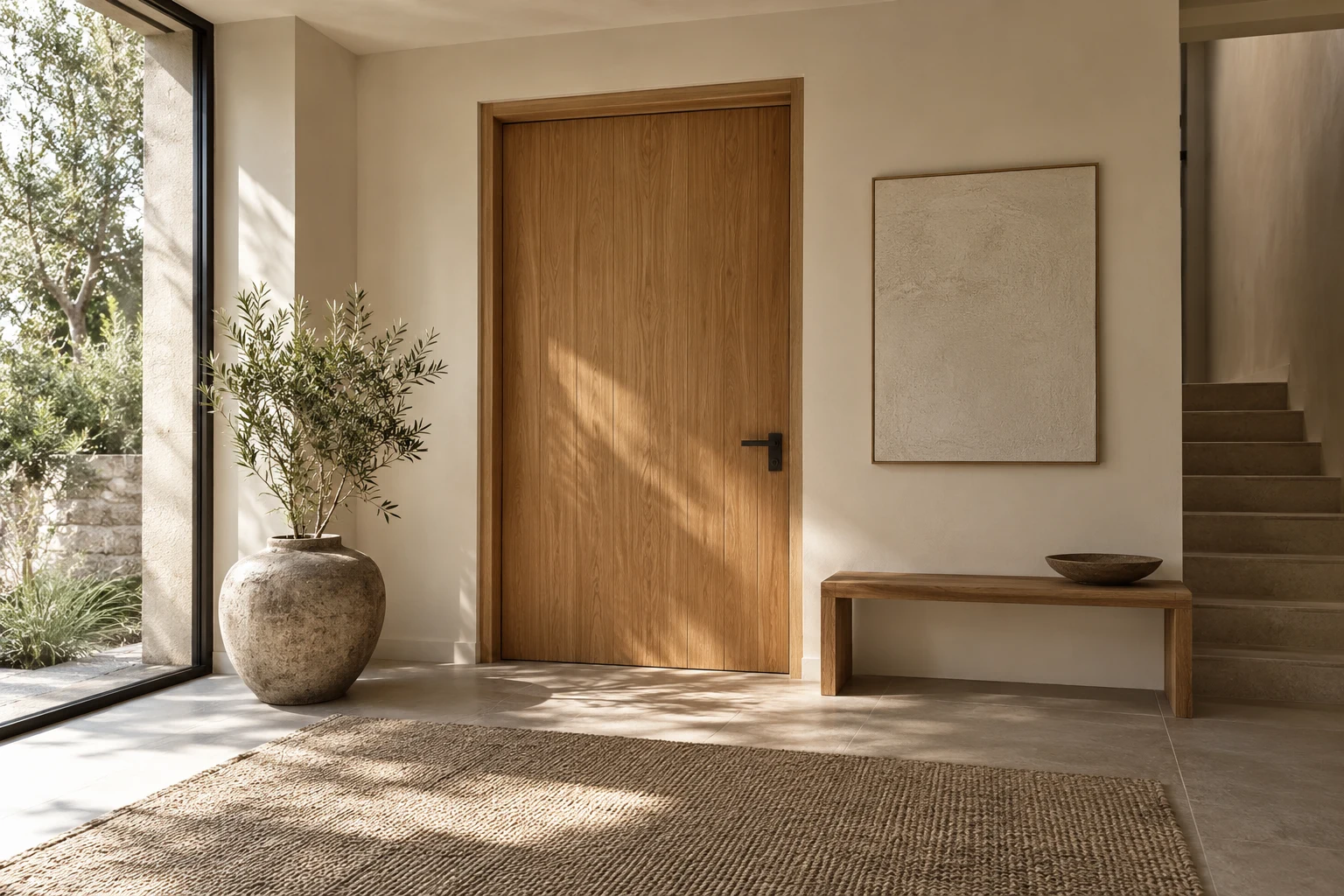

Not every house fits a single style label. A traditional roof might sit above new windows, or an older brick shell may contain a thoroughly contemporary interior. In that situation, the front door does not have to pick a side.
A transitional approach borrows the order of a traditional door and reduces the amount of decoration. Think recognizable panels, cleaner edges and hardware that is straightforward rather than aggressively futuristic. The proportions do most of the work. A carefully balanced pair of panels can relate to the original house while keeping the entrance from feeling nostalgic.
Choose one point of continuity. Perhaps the door repeats the window color, respects the existing surround or picks up a warm tone in the masonry. Too many matching moves can make the renovation feel forced. One clear connection is often enough to explain why the new element belongs.
Judge the result from both directions. The exterior needs to work with the street, but the interior face is part of the hall. A convincing transitional door makes sense when you arrive home and when you turn around to leave.
Photograph credit & license
Witten Haus Annenstraße 111 2.jpg by Reclus. CC0. Displayed with responsive cropping; original downloaded image retained.
Photographs are drawn from an international architectural reference collection. Their use does not imply a Side Door installation or endorsement by the photographer.