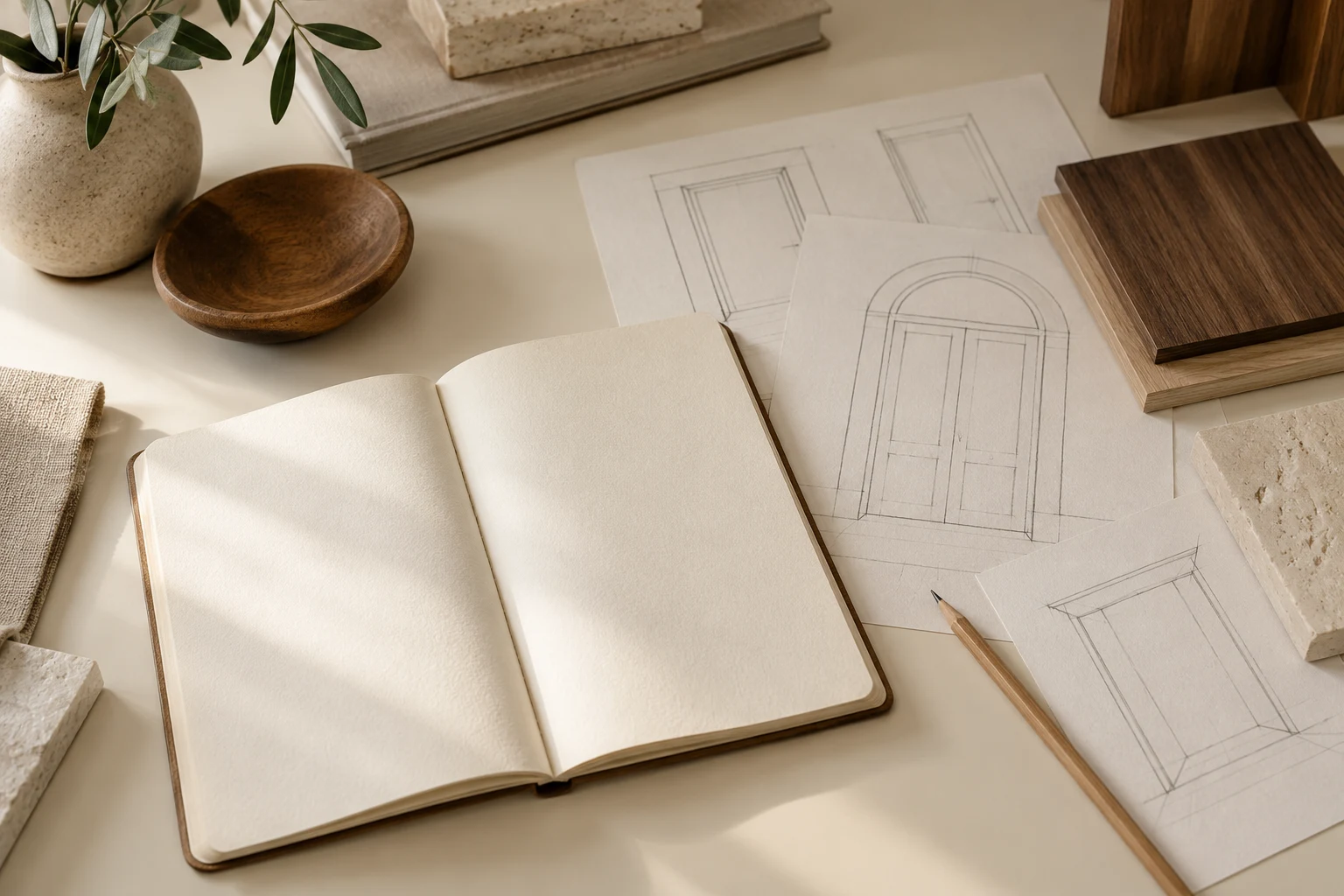

Place two white samples beside each other and the idea of a single, neutral white quickly disappears. One may look creamy, another gray, another unexpectedly blue. At an entrance, those small differences become visible beside stone, mortar and window trim.
Take a sample outside and compare it with the permanent materials. A cool white that looked crisp in the showroom can feel detached from warm limestone. A creamy finish may look comfortable beside the wall but noticeably yellow next to a cooler window frame. Neither sample is wrong on its own; the relationship is what matters.
Decide whether the door should merge with the surround or stand apart from it. Matching the two can make a small entrance feel less fragmented. A slight contrast can help visitors locate the opening, particularly where the facade has several pale surfaces.
Remember the lower part of the door. Splashing water, dust and regular hand contact are practical considerations, not reasons to rule out white. Ask about suitable cleaning methods and choose details you are willing to maintain. A beautiful pale entrance should still feel usable on an ordinary wet morning.
Photograph credit & license
Dar Affes 9.jpg by Houssem Abida. CC BY-SA 4.0. Displayed with responsive cropping; original downloaded image retained.
Photographs are drawn from an international architectural reference collection. Their use does not imply a Side Door installation or endorsement by the photographer.