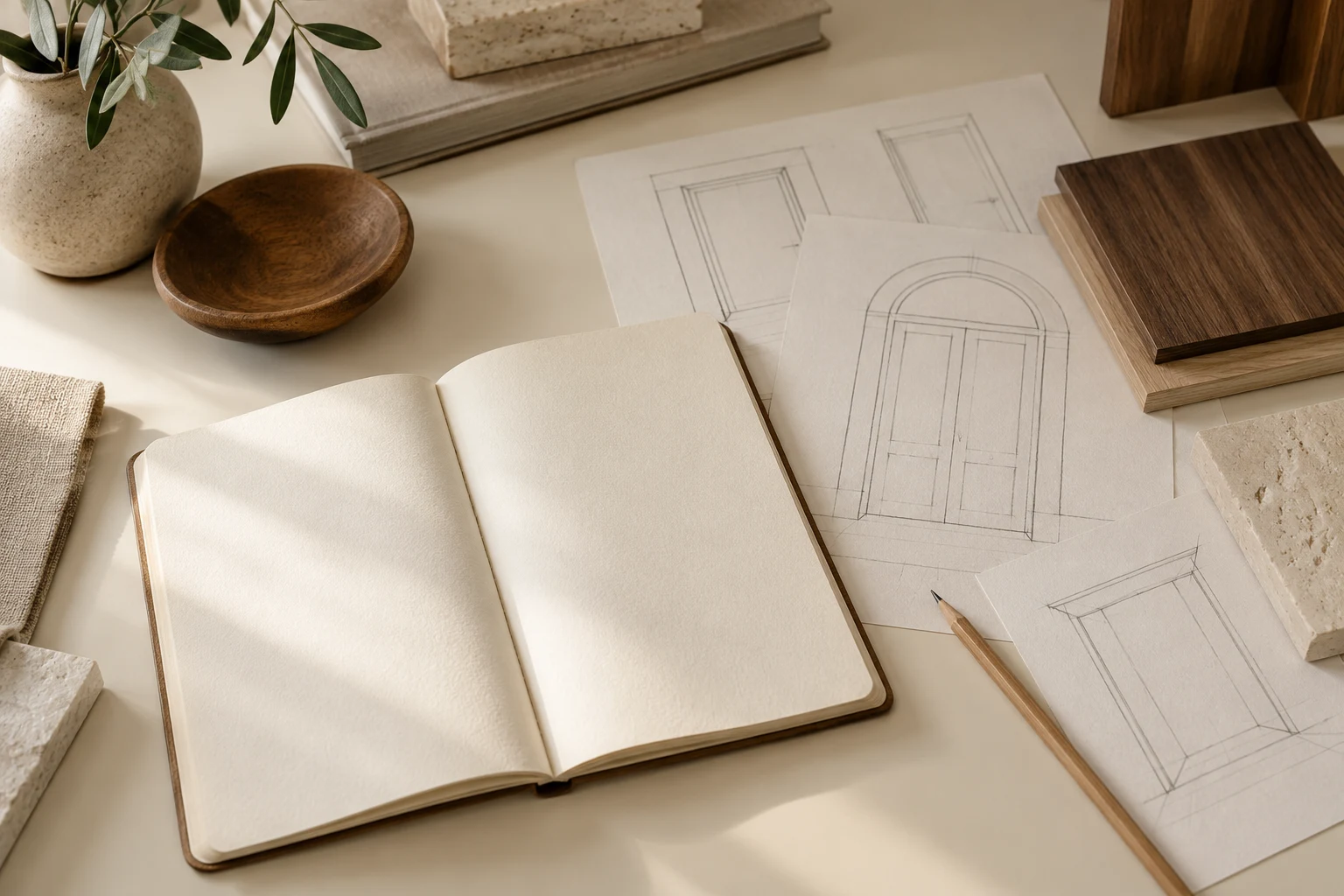

A door belongs to two rooms, even when one of them is outdoors. The exterior face participates in the facade; the interior face sits beside flooring, wall paint and furniture. Treating those as separate design conditions can solve an otherwise awkward compromise.
A dark exterior might give the street elevation the definition it needs, while a lighter interior face keeps a small hall from feeling closed in. The reverse can work in a bright exterior with a more dramatic interior scheme. The important thing is to picture the door open as well as closed, because edges and frame surfaces become visible during everyday use.
Ask whether a two-tone finish is offered for the exact product, and request a clear explanation of which surfaces receive each color. Do not assume the frame, threshold or hinge edges will follow the same rule as the two main faces.
Before committing, place samples on both sides of the opening. Walk through the entrance and look back. A good two-tone decision should make the transition feel natural, not create an unexpected stripe of color whenever someone comes home.
Photograph credit & license
Colors (247714559).jpeg by Noel Demulier. CC0. Displayed with responsive cropping; original downloaded image retained.
Photographs are drawn from an international architectural reference collection. Their use does not imply a Side Door installation or endorsement by the photographer.