
A narrow glazed insert offers a useful middle ground between an opaque door and a fully glazed entrance. It interrupts the surface without turning the hallway into a display. The important choice is not simply how much glass to add, but where its line belongs.
On a broad panel, an off-center strip can draw attention toward the handle. A central insert creates a more formal composition. Neither is automatically modern: the surrounding frame, panel divisions and hardware decide how the finished door reads.
Look at the insert from inside as well. Will it throw a patch of light onto a plain wall, or sit behind a coat rack? A small amount of carefully placed daylight can feel more valuable than a larger pane that faces a cluttered corner.
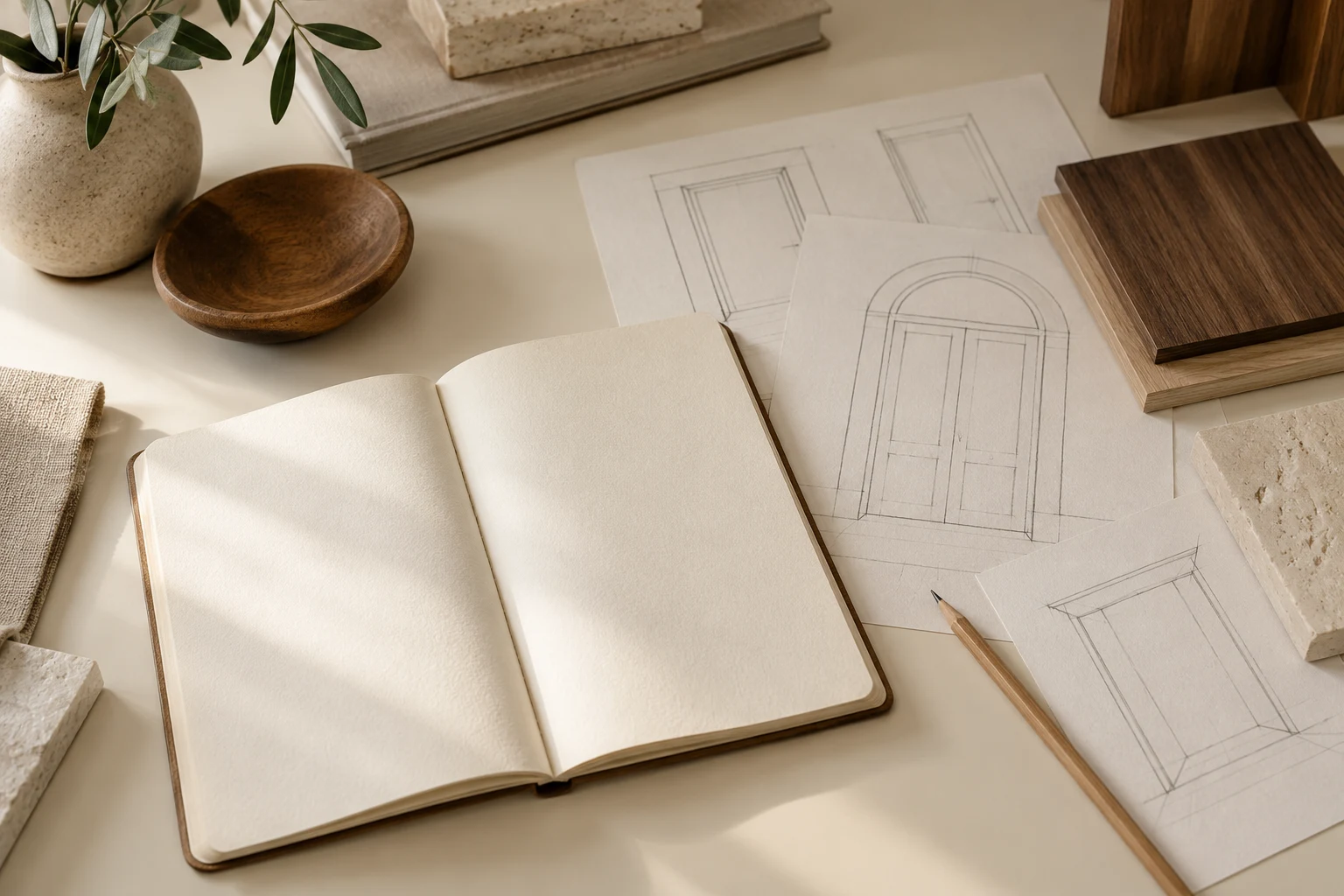
Use a full-door drawing to judge proportions. Tiny samples exaggerate the texture of glass and tell you little about its relationship to the panel. Ask the supplier which insert sizes and positions are available in the chosen system; a sketch is a starting point, not proof that a custom arrangement can be built.
Photograph credit & license
Lamb House - geograph.org.uk - 7312805.jpg by Martin Laverty. CC BY-SA 2.0. Displayed with responsive cropping; original downloaded image retained.
Lamb House by Martin Laverty
Photographs are drawn from an international architectural reference collection. Their use does not imply a Side Door installation or endorsement by the photographer.